Business License

TPU Resin for Fire Hoses: Why Polyurethane Wins Over PVC
A fire department once retired a set of PVC-lined hoses after they became stiff and cracked at the folds during a cold-weather drill. The hoses were only three years old, but the PVC liner had plasticized and embrittled, and the crews had lost confidence in equipment they could not trust in an emergency.
The replacement order specified TPU liners, and the TPU-lined hoses were obviously more flexible and durable from the first deployment. Fire hoses are life-safety equipment, and the liner material carries most of the responsibility. This article explains why TPU resin has become the material of choice for fire hose liners and where it beats PVC.
1. How a Fire Hose Is Built
A modern fire hose has two main layers. The outer jacket is a woven fabric, usually polyester or aramid-based, that carries the pressure and resists abrasion on the ground. The inner liner is a polymer tube that keeps the water in and protects the jacket from moisture and chemical attack.
The liner must seal under pressure, stay flexible when coiled and uncoiled, survive dragging over rough surfaces, and resist the chemicals that hoses meet at fire scenes. It must also keep working at temperatures from freezing to hot sun, because hoses are stored in trucks and deployed in all weather.
The liner material therefore decides much of the hose's service life and reliability. PVC liners were common for decades because they are cheap and easy to process, but their weaknesses become visible over time, and the fire service industry has been moving toward TPU for exactly that reason.
2. Why TPU Wins Over PVC for Liners
TPU liners outperform PVC in flexibility, cold performance, abrasion resistance, and durability. A TPU liner stays supple in cold weather and coils tightly without permanent kinks, while PVC stiffens and cracks as its plasticizer migrates or leaches out. Flexibility at the fold point is a safety issue, because a cracked liner fails under pressure.
Abrasion resistance also separates the two. Hoses get dragged across asphalt, concrete, and debris, and a TPU liner resists wear far better than PVC. The same property that makes TPU ideal for conveyor belts and seals applies directly to hose liners that take constant surface punishment.
The table below summarizes the comparison for liner service. These differences translate directly into replacement intervals and field reliability.
| Property | TPU Liner | PVC Liner |
|---|---|---|
| Cold flexibility | Excellent, coils in freezing weather | Stiffens, cracks at folds |
| Abrasion resistance | Excellent | Moderate |
| Long-term durability | High, longer service life | Plasticizer loss over time |
| Chemical resistance | Good to excellent | Variable |
| Recyclability | Thermoplastic, reprocessable | Limited |
| Relative material cost | Higher | Lower |
The higher material cost of TPU is offset by a longer service life and fewer field failures. For life-safety equipment, the cost argument is secondary to reliability, which is why many specifications now require TPU liners outright.
Coil behavior is another practical advantage. A TPU-lined hose coils flat and springs open without fighting the firefighter, even after being stored folded in a truck compartment. PVC liners hold a memory of the fold and can kink or restrict flow when deployed, a difference that becomes obvious the moment a crew needs speed.
3. Polyester vs Polyether TPU for Hoses
Within TPU, the polyol basis matters for hoses. Polyether-based TPU resists hydrolysis, the slow chemical breakdown of the polymer by water, which is directly relevant to a liner that spends its life in contact with water. It also keeps its flexibility at low temperature better than polyester grades.
Polyester-based TPU offers higher tensile and abrasion resistance, which suits heavy-duty hose jackets and industrial hoses that see extreme wear. For standard fire hose liners, polyether-based TPU is often the safer choice because water exposure is constant and cold-weather performance is critical.
Some manufacturers use blends or dedicated formulations to balance the two. The selection depends on the hose's duty: municipal fire hose, industrial discharge hose, or suction hose each has a different priority list. A supplier that offers both families can match the resin to the hose type rather than forcing one chemistry on every product.
Water quality also enters the decision. Hoses that carry aggressive water, treated water, or water with dissolved chemicals benefit from the higher hydrolysis margin of polyether chemistry, while hoses used mainly with clean water at moderate temperatures can take advantage of polyester's stronger mechanicals. The resin choice is an engineering decision, not a habit.
4. Hardness and Thickness: Tuning the Liner
Liner hardness is typically specified in the Shore A range, often between 80A and 95A for fire hose service. A harder liner supports higher pressure and resists puncture, while a softer liner coils more easily and seals better against the jacket. The chosen value balances these needs.
Thickness is the other design variable. Thicker liners are more robust but heavier and stiffer, while thinner liners reduce weight and improve flexibility at the cost of some puncture resistance. Most fire hose liners fall in a narrow thickness window, and the exact value is set by the hose standard the manufacturer must meet.
The resin's melt behavior, reflected in its melt flow index, affects how evenly the liner is extruded. A consistent liner wall is essential, because thin spots become failure points under pressure. This is where the resin supplier's batch consistency shows up in the finished product's reliability.
5. How the Liner Is Made
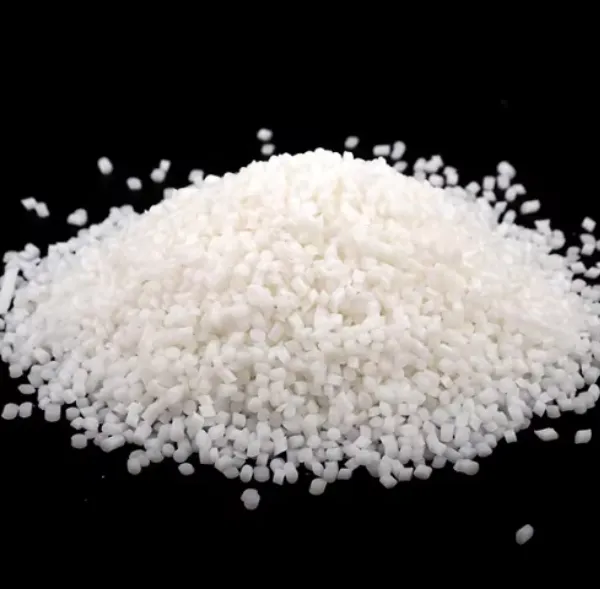
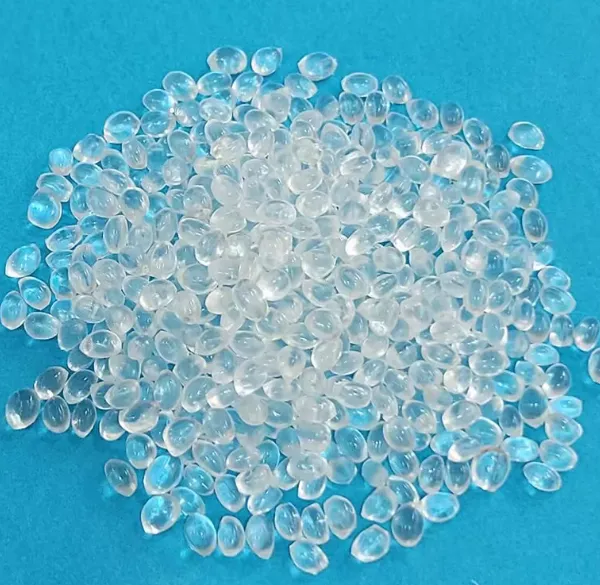
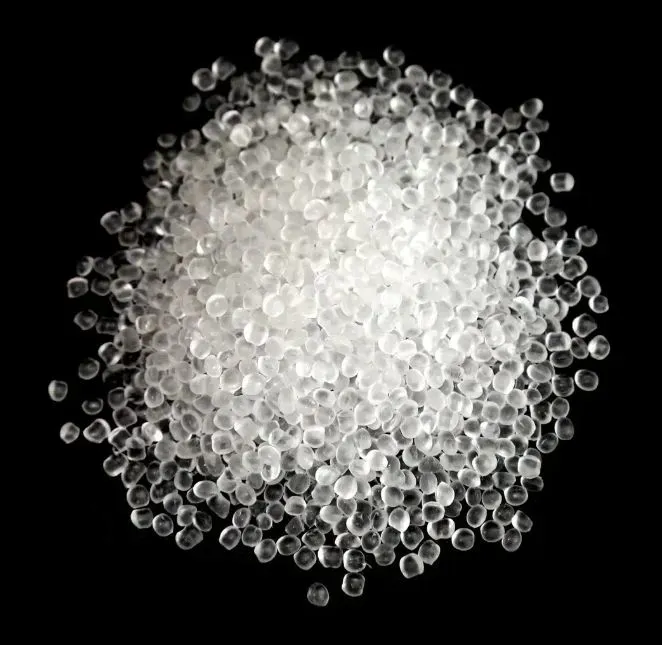
Fire hose liners are usually extruded as a continuous tube from TPU granules. The resin is dried, melted in an extruder, and formed through a die into a tube, which is then cooled and either used directly or bonded to the woven jacket. The process is similar to other TPU extrusion work but with tighter demands on wall consistency.
Bonding the liner to the jacket is the next step. Some hoses use an adhesive layer, while others rely on the liner being extruded or fused onto the jacket. The bond must survive flexing and pressure cycling, because a liner that separates from the jacket balloons and blocks water flow.
Quality checks in production include wall thickness measurement, pressure testing, and flex testing. The finished hose must pass a proof pressure well above its rated working pressure, and the liner's integrity is central to that test. Consistent resin feed is a prerequisite for passing these checks batch after batch.
Drying discipline is non-negotiable in liner extrusion. TPU pellets absorb moisture, and undried resin produces bubbles that become pinholes in the liner wall, which fail under pressure. Manufacturers dry the granules to below roughly 0.05% moisture before extrusion, and the data sheet's drying parameters are followed without shortcuts. This single habit prevents most liner defects before they reach the pressure test.
6. Testing and Standards for Fire Hoses
Fire hoses are tested to national and international standards that set working pressure, burst pressure, elongation, and flex requirements. Liner materials are evaluated for burst strength, adhesion to the jacket, and resistance to water and chemicals. These tests use standardized procedures and are the basis for hose certification.
For resin buyers, the relevant data is how the liner performs in those tests. Ask the resin supplier for data relevant to pressure retention, hydrolysis resistance, and cold flexibility, and validate the finished hose against the applicable standard. The resin choice must support the hose's compliance, not just its price.
It is worth noting that testing conditions vary by region and by hose type. A municipal fire hose and an industrial transfer hose are validated against different requirements, so the resin grade should be selected for the specific standard the manufacturer targets. Puyang Jialin Science and Technology Co Ltd supplies TPU granules used in hose liner production and provides technical data to support manufacturers' validation work.
7. Two Cases from the Field
A while back, a hose manufacturer was producing liners from a generic TPU grade and seeing occasional liner wrinkling during pressure testing. We supplied a polyether-based TPU granule with a tighter melt flow window and helped adjust the extrusion profile. The wrinkling disappeared, and the pass rate on the pressure test improved noticeably across the following production runs.
Another customer had been using a PVC-lined hose for industrial water transfer and replacing units every two years due to liner cracking. After switching to a TPU liner made from our polyester-based grade, the replacement interval stretched to roughly five years, and the hose tolerated colder service conditions than the PVC version.
8. Sourcing TPU Resin for Hose Liners
When sourcing TPU for hose liners, specify the hose type, the working pressure, and the service environment first. State whether the hose meets cold climates, chemical exposure, or heavy abrasion, because these inputs decide the polyol family and hardness. A one-page specification beats a general inquiry every time.
Request the resin's hardness, melt flow index with conditions, and drying requirements, and confirm batch-to-batch consistency. For liner production, consistency matters more than a single outstanding test value, because every batch must produce a uniform, pressure-tight liner.
Ask for trial quantities and extrusion guidance. Our team at Puyang Jialin Science and Technology can supply TPU granules for liner trials, together with recommended processing parameters, so the manufacturer can validate the material on their own line before committing to volume. This approach keeps the risk low and the learning curve short.
9. The Outlook for TPU in Hose Applications
The trend in fire and industrial hoses is clearly toward TPU liners, driven by longer service life, better cold performance, and tighter environmental rules on plasticizers used in PVC. As replacement cycles come due, more fleets and plants are specifying TPU without a second thought.
TPU's recyclability adds another advantage. Offcuts and rejected liner tubes can be reground and reprocessed in many cases, reducing waste compared with plasticized PVC scrap. For manufacturers under sustainability reporting, this is a meaningful difference.
For buyers, the message is simple: the liner is the safety-critical part of the hose, and the resin is the safety-critical part of the liner. Choosing the right TPU grade, with the right polyol basis and a consistent supply, is the cheapest insurance a hose manufacturer can buy.
10. FAQ
10.1 Why do TPU fire hoses last longer than PVC ones?
TPU resists hydrolysis and abrasion better than PVC, and it does not lose plasticizer over time the way PVC does. PVC liners stiffen and crack as plasticizers migrate, especially in cold or wet service, while TPU keeps its flexibility and strength. The result is a longer service life and fewer field failures. In practice, departments that switch to TPU-lined hoses report fewer replacements and less equipment downtime, and the hoses stay supple for years rather than months.
The higher initial cost is recovered through reduced replacement frequency and the reliability that matters in emergency service.
10.2 Is TPU fire hose liner safe for potable water?
TPU is used in food-contact and potable-water applications in many regions, but the specific grade must be suitable for the intended use, and the finished hose must meet the applicable regional requirements. Confirm the grade selection and the finished product validation with the supplier and the relevant standard before using the hose for potable water. The liner's extractables, taste, and odor behavior are tested as part of that validation, so do not assume a general-purpose TPU grade is automatically compliant. Ask the supplier for the specific data relevant to potable-water service rather than relying on general claims.
10.3 Can TPU liner hoses be repaired in the field?
Field repairs depend on the damage and the equipment available. Small punctures in a TPU liner can sometimes be patched with compatible TPU adhesive and a patch, while major liner damage usually requires a replacement hose. Because TPU is thermoplastic, manufacturers can also reprocess production scrap, which is not possible with thermoset or plasticized PVC systems. Before attempting a field repair, pressure-test the hose to confirm the patch holds at working pressure, and check the affected section for additional damage.
If the liner shows widespread cracking or delamination, replace the hose rather than risking a failure in service.
10.4 What is the working pressure range for TPU-lined fire hoses?
TPU-lined hoses are produced for a wide range of working pressures, from light municipal service at roughly 10 to 16 bar up to heavy industrial and forestry hoses at higher ratings. The liner thickness, hardness, and jacket construction together set the pressure rating. Match the hose specification to the standard required for your application, and confirm the working pressure, burst pressure, and test pressure with the manufacturer. Do not use a hose above its rated pressure, because the margin between working and burst pressure is set by the standard and assumes proper handling and maintenance.
Recently Posted
-
Melt Flow Index in TPU: Why It Matters and How to Specify It
September 3, 2026An extrusion plant once switched TPU suppliers and kept every process setting unchanged, assuming that a similar hardness meant a Read More
 -
TPU Technical Data Sheet Reading Guide: Hardness, Tensile Strength, Elongation
September 3, 2026A purchasing engineer once compared two TPU granules with the same hardness number and chose the cheaper one based on the price co Read More
 -
TPU vs EVA: Material Differences for Footwear, Sports and Packaging Use
September 2, 2026A sports-goods brand once approved an EVA midsole for a running shoe line because EVA was cheaper and easy to mold. After a season Read More
 -
What Is TPU Hot Melt Adhesive? Composition, Working Principle and Applications
September 2, 2026A textile plant once ran a solvent-based adhesive line for years, accepting the ventilation costs and fire-safety paperwork as una Read More

Contact Us
Recommended Products
-
 Thermoplastic Polyurethane TPU Resin For Printing Ink TPU GranulesUS$ 2.22MOQ: 1 Kilogram
 -
Thermoplastic Polyurethane TPU Resin For Reflective Material/TPU Granules for Adhesion to Glass Microbeads and Gold Silver Powder. US$ 2.22MOQ: 1 Kilogram
-
Tunsing DS220 TPU Polyurethane Adhesive Powder for Heat TransferUS$ 2.22MOQ: 1 Kilogram
-
Thermoplastic Polyurethane TPU Resin For Reflective Material TPU GranulesUS$ 2.22MOQ: 1 Kilogram
-
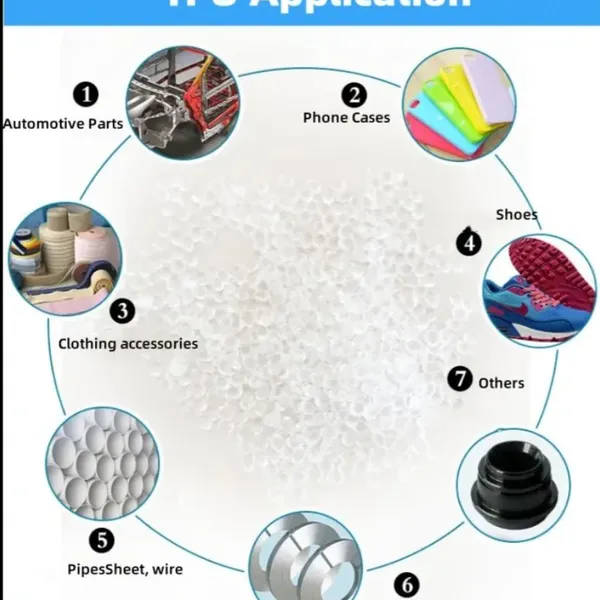
Factory Price TPU Resin TPU Granules KG Thermoplastic Polyurethane Powder for Sports Shoe Sole/Cable/Phone Case TPU PelletsUS$ 2.22MOQ: 1 Kilogram
-
Thermoplastic Polyurethane TPU Resin For Solvent-based Adhesive TPU GranulesUS$ 2.22MOQ: 1 Kilogram
-
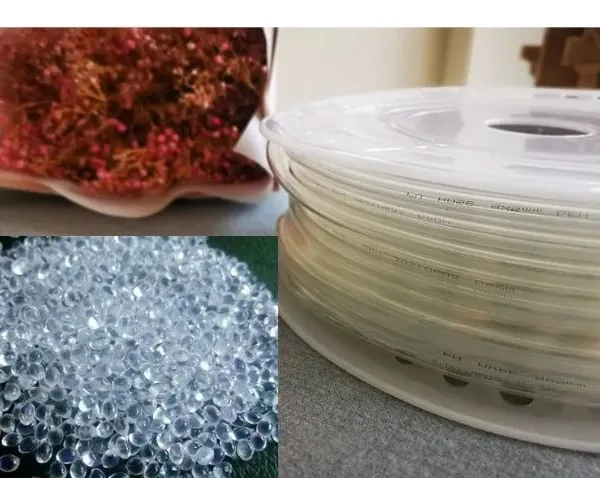
Thermoplastic Polyurethane TPU Resin for Fire Hoses/Tpu Hot Melt AdhesivesUS$ 2.22MOQ: 1 Kilogram
-
Thermoplastic Polyurethane TPU Resin For Hot Melt Adhesive TPU GranulesUS$ 2.22MOQ: 1 Kilogram
-
Thermoplastic Polyurethane TPU Resin for Fire Hoses/Different Hardness TPU Pellets Virgin Plastic Raw MaterialUS$ 2.22MOQ: 1 Kilogram
-
Thermoplastic Polyurethane TPU Resin For Fire Hose TPU GranulesUS$ 2.22MOQ: 1 Kilogram
-
Low Temperature Solvent Based Aliphatic Non-yellowing TPU Adhesive for Shoe TPU ResinUS$ 2.22MOQ: 1 Kilogram
-
Thermoplastic Polyurethane Glue Hot Melt Adhesive Grade High Viscosity TPU Resin For ShoesUS$ 2.04MOQ: 1 Kilogram
-
Low Temperature Hot Melt Adhesive Resin TPU Solvent Ester DissolutionUS$ 2.22MOQ: 1 Kilogram
-
Thermoplastic Polyurethane Glue Hot Melt Adhesive Grade High Viscosity TPU Resin for ShoesUS$ 2.22MOQ: 1 Kilogram
-
Thermoplastic Polyurethane Glue Hot Melt Adhesive Grade High Viscosity TPU Resin for ShoesUS$ 2.22MOQ: 1 Kilogram
-
Hot Melt Adhesive Grade TPU Thermoplastic Polyurethane Plastic Raw MaterialUS$ 2.22MOQ: 1 Kilogram
-
High Viscosity TPU Raw Materials Resin Adhesive Grade Thermoplastic Polyurethane TPU PelletUS$ 2.22MOQ: 1 Kilogram
-
60A-100A Low-temperature High Viscosity TPU Solvent Based Adhesive MaterialUS$ 2.22MOQ: 1 Kilogram
-
Low Temperature TPU 55A-85A Thermoplastic Polyurethane Granules TPU Resin Pellets for ShoesUS$ 2.22MOQ: 1 Kilogram
-
Thermoplastic Polyurethane Elastomer Granules TPU 65A Granules Polyurethane TPU Resin for ShoesUS$ 2.22MOQ: 1 Kilogram