Business License

Melt Flow Index in TPU: Why It Matters and How to Specify It
An extrusion plant once switched TPU suppliers and kept every process setting unchanged, assuming that a similar hardness meant a similar material. The new TPU granules produced film with heavy edge tearing and inconsistent thickness, and the line lost a full shift before the operator checked the melt flow index. The new grade had roughly twice the MFI of the old one, so the melt was too fluid for their die. Melt flow index is one of the most useful numbers on a TPU data sheet, and this article explains what it measures, why it matters, and how to specify it so the material and the process actually match.

1. What Is Melt Flow Index?
Melt flow index, or MFI, measures how many grams of melted polymer pass through a fixed die in ten minutes under a set load and temperature. It is reported in grams per 10 minutes, and it is a practical gauge of melt viscosity. A high MFI means the melt flows easily; a low MFI means it is thick and stiff.
The test is quick and cheap, which is why MFI appears on nearly every TPU data sheet. It uses a simple heated barrel and piston, and the result is repeatable enough for batch-to-batch checks. For a buyer, MFI is the fastest single indicator of whether a grade suits the processing method.
Some suppliers use the term melt flow rate, or MFR, interchangeably with MFI. They mean the same measurement in most cases, so check the units and conditions rather than the label. Puyang Jialin Science and Technology Co Ltd lists MFI with its test conditions on every TPU data sheet we publish, because a number without conditions is only half the information.
2. How MFI Is Measured
The measurement follows a standard procedure. A sample of pellets is loaded into a heated barrel, preheated to the test temperature, and pushed through a die by a weighted piston. The extruded material is cut at set intervals and weighed, and the result is expressed in grams per 10 minutes.
The two variables that change the result are temperature and load. Most TPU grades are tested at temperatures between 170 and 210 °C with a load that the supplier states on the sheet, and the same polymer can report very different MFI values under different conditions. Always record the temperature and load alongside the MFI number.
Because the conditions vary between suppliers, comparing MFI values requires matching conditions first. A grade reported at 10 g/10 min under one set of conditions may be equivalent to a grade reported at 15 g/10 min under a different set. The conditions line is the key to a fair comparison.
3. Why MFI Matters for Your Process
Each processing method has a preferred MFI window. Injection molding favors higher MFI so the melt fills the mold cavity quickly and completely, especially for thin-wall parts. Extrusion needs lower MFI so the melt holds its shape as it leaves the die, and film casting or blow molding sits between the two.
The table below maps typical TPU MFI ranges to processing methods. Use it as a starting point, then confirm with the supplier's recommended window for the specific grade.
| Process | Typical TPU MFI Range | Why This Range |
|---|---|---|
| Injection molding | Moderate to high | Fills complex molds, thin walls |
| Extrusion, film and sheet | Low to moderate | Melt strength holds die shape |
| Blow molding | Moderate | Parison stability and inflation |
| Hot melt adhesive | Varies by application | Controls viscosity at application |
| Powder and film coating | Grade-specific | Uniform melt flow at activation |
Matching the MFI to the process prevents the most common defects. Too-high MFI in extrusion causes sagging, edge tear, and thin spots. Too-low MFI in injection molding causes short shots, voids, and high injection pressure. The right range is a compromise between flow and melt strength that the supplier can guide.
Melt temperature is the lever that moves effective flow in either direction. Raising the barrel temperature by 10 to 20 °C increases the effective flow of a low-MFI grade, while lowering it stiffens a high-MFI grade. This flexibility is useful for small adjustments, but it cannot fix a large MFI mismatch, and running far outside the recommended window risks degradation and inconsistent parts.
4. MFI and Molecular Weight: The Hidden Link
MFI is a rough inverse indicator of molecular weight. Within the same chemistry, a lower MFI usually means longer polymer chains and a tougher material, while a higher MFI often comes with shorter chains and easier flow. This link explains why MFI correlates with mechanical strength in many TPU families.
The practical consequence is that MFI affects more than processing. A grade chosen only for easy flow may carry lower tensile strength, while a grade chosen for strength may be hard to process. The right grade balances both, and the data sheet's mechanical section should be read together with the MFI line.
Additives also shift MFI. Plasticizers and lubricants raise the flow number, while fillers and reinforcements lower it. A data sheet that reports MFI on the base resin may not describe the compounded product, so confirm the number reflects the exact material you are buying.
5. How MFI Affects Adhesive Applications
In hot melt adhesive work, MFI translates directly into application viscosity. A low-MFI TPU gives a thick, high-viscosity melt that supports heavy coating weights and resists squeeze-out, while a high-MFI grade gives a thinner melt that wets smooth substrates more easily and penetrates porous ones.
For powder coating and film lamination, the melt behavior at activation temperature decides coverage and bond uniformity. A powder that flows too much can strike through the substrate, while one that flows too little leaves a weak bond. The MFI, together with the activation temperature, is the main dial for tuning this behavior.
Converters who make several adhesive products often keep a small MFI range in stock and adjust the application temperature instead of changing the material. This practice works within limits, but large process changes are better served by selecting the right MFI grade in the first place.
6. How to Specify MFI to a Supplier
When writing a TPU specification, state the MFI with its test conditions, not as a bare number. For example, specify "MFI 15 to 25 g/10 min at 190 °C, 2.16 kg" rather than "MFI 20." The conditions make the number reproducible and comparable across suppliers.
Add a tolerance that reflects the process sensitivity. A tight tolerance of plus or minus 3 g/10 min suits extrusion lines that are sensitive to melt strength, while a wider range is acceptable for less demanding processes. The supplier should confirm what tolerance their production can hold batch to batch.
Ask how the MFI was measured and whether the value is typical or a minimum range. Puyang Jialin Science and Technology provides MFI values with conditions and confirms batch consistency for customers whose processes are MFI-sensitive, because a stable number is what keeps a line running without re-tuning.
7. MFI Limitations: What the Number Does Not Tell You
MFI is a single-point measurement and does not describe how viscosity changes with shear rate. Two materials with the same MFI can behave differently in a real screw barrel because one is more shear-sensitive than the other. For complex molds or high-speed lines, the MFI is a screen, not a complete process model.
MFI also says nothing about elasticity, melt strength, or die swell, which matter in blow molding and film blowing. A grade with good MFI can still collapse in the parison if its melt strength is weak. Suppliers who serve these processes usually provide additional rheology data on request.
Shear-thinning behavior is the biggest blind spot. Real screws and dies subject the melt to much higher shear rates than the MFI test, and polymers differ in how much their viscosity drops under shear. Two grades with identical MFI can therefore fill a thin-wall mold differently, which is why a trial on the actual machine is the final check no data sheet can replace.
Finally, MFI is measured on the neat polymer and may change after drying, reprocessing, or blending. Incoming inspection should measure the pellets as received, and the specification should be based on that same condition so the comparison stays fair.
8. Two Cases from the Field
A while back, a film producer had recurring thickness variation on a TPU film line. The pellets were within the hardness specification, but the MFI drifted between batches, and the extrusion die amplified the difference. We helped them add an MFI check to incoming inspection, and the line's thickness variation dropped to a fraction of the previous level.
Another customer, an injection molder, was using a low-MFI grade for a thin-wall phone case and fighting short shots. Switching to a higher-MFI grade at the same hardness filled the mold cleanly, cut the injection pressure, and reduced the reject rate by roughly a third in the following month.
9. Building MFI into Your Incoming Inspection
Add MFI to the incoming inspection list alongside hardness, and test it with the same conditions stated on the data sheet. A simple melt flow tester is inexpensive compared with the cost of a line stoppage, and the measurement takes minutes per batch.
Record the MFI of every received batch and track the trend over time. A gradual drift toward the edge of the tolerance window warns of process changes at the supplier before the material becomes unusable. Early warning is the real value of routine MFI checking.
Agree with the supplier on the tolerance and the test method at the start of the relationship. When both sides measure the same way and hold the same window, the MFI number becomes a reliable contract point instead of a source of disputes.
A practical note on sampling: test pellets from the same bag, from different bags in the same lot, and from different lots over time. Single-bag checks miss the batch-level spread that actually affects the line, while the historical trend reveals the supplier's consistency. Two extra measurements per delivery cost little and remove a large share of processing uncertainty.
10. FAQ
10.1 What is a normal MFI for TPU?
There is no single normal value, because the right MFI depends on the process. Injection grades often sit in a moderate-to-high range, while extrusion grades need lower values for melt strength. Check the supplier's data sheet for the grade and its test conditions, and match the number to your process rather than comparing with an arbitrary benchmark. For a first estimate, injection grades commonly fall between 10 and 40 g/10 min at the stated conditions, and extrusion grades lower than that, but the exact window is grade-specific.
Ask the supplier for their recommended range for your process instead of assuming one.
10.2 Can I use MFI to compare TPU grades from different suppliers?
Only if the test conditions match. MFI depends on temperature and load, so compare numbers measured under the same conditions, typically 190 or 200 °C with a stated load. Ask each supplier for the conditions line, convert or re-test where needed, and compare like with like. If a supplier cannot state the test conditions, the number is not comparable at all, no matter how convenient the comparison would be.
When in doubt, send all candidate grades to one laboratory and measure them under identical conditions, which removes every method-related doubt in a single test.
10.3 Does a higher MFI mean worse TPU quality?
No. MFI is a processing property, not a quality score. A high-MFI grade can be exactly right for injection molding or hot melt adhesive, and a low-MFI grade can be right for extrusion. The question is whether the MFI suits the process and whether the batch stays consistent with the specification.
Within the same grade, a sudden MFI jump between deliveries is a quality signal worth investigating, because it usually points to a process or raw-material change at the supplier. Trend the number over time and act on drift rather than judging a single value.
10.4 Why does my TPU film sag during extrusion?
Sagging usually means the melt flow is too high for the die and take-off setup, so the melt lacks the strength to hold its shape between the die and the rollers. A lower-MFI grade, or a slight reduction in melt temperature, increases melt strength. Confirm the grade's MFI and processing window before changing settings, because lowering the temperature too far can cause the melt to freeze prematurely and create new defects. Start with a 10 °C reduction, observe the film edge stability, and only change the grade if temperature tuning cannot solve the sagging.
Recently Posted
-
TPU Resin for Fire Hoses: Why Polyurethane Wins Over PVC
September 3, 2026A fire department once retired a set of PVC-lined hoses after they became stiff and cracked at the folds during a cold-weather dri Read More
 -
TPU Technical Data Sheet Reading Guide: Hardness, Tensile Strength, Elongation
September 3, 2026A purchasing engineer once compared two TPU granules with the same hardness number and chose the cheaper one based on the price co Read More
 -
TPU vs EVA: Material Differences for Footwear, Sports and Packaging Use
September 2, 2026A sports-goods brand once approved an EVA midsole for a running shoe line because EVA was cheaper and easy to mold. After a season Read More
 -
What Is TPU Hot Melt Adhesive? Composition, Working Principle and Applications
September 2, 2026A textile plant once ran a solvent-based adhesive line for years, accepting the ventilation costs and fire-safety paperwork as una Read More

Contact Us
Recommended Products
-
 Thermoplastic Polyurethane TPU Resin For Printing Ink TPU GranulesUS$ 2.22MOQ: 1 Kilogram
 -
Thermoplastic Polyurethane TPU Resin For Reflective Material/TPU Granules for Adhesion to Glass Microbeads and Gold Silver Powder. US$ 2.22MOQ: 1 Kilogram
-
Tunsing DS220 TPU Polyurethane Adhesive Powder for Heat TransferUS$ 2.22MOQ: 1 Kilogram
-
Thermoplastic Polyurethane TPU Resin For Reflective Material TPU GranulesUS$ 2.22MOQ: 1 Kilogram
-
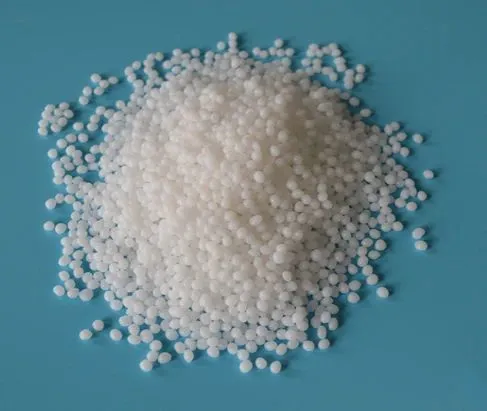
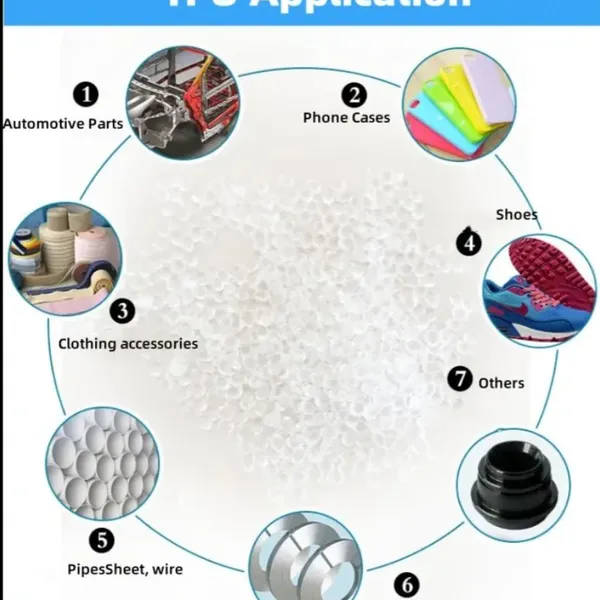
Factory Price TPU Resin TPU Granules KG Thermoplastic Polyurethane Powder for Sports Shoe Sole/Cable/Phone Case TPU PelletsUS$ 2.22MOQ: 1 Kilogram

-
Thermoplastic Polyurethane TPU Resin For Solvent-based Adhesive TPU GranulesUS$ 2.22MOQ: 1 Kilogram
-
Thermoplastic Polyurethane TPU Resin for Fire Hoses/Tpu Hot Melt AdhesivesUS$ 2.22MOQ: 1 Kilogram
-
Thermoplastic Polyurethane TPU Resin For Hot Melt Adhesive TPU GranulesUS$ 2.22MOQ: 1 Kilogram
-
Thermoplastic Polyurethane TPU Resin for Fire Hoses/Different Hardness TPU Pellets Virgin Plastic Raw MaterialUS$ 2.22MOQ: 1 Kilogram
-
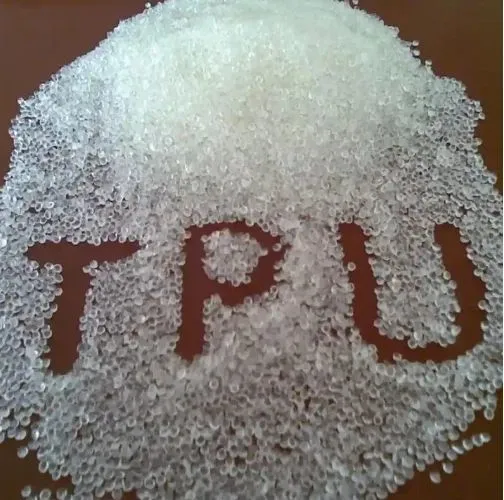
Thermoplastic Polyurethane TPU Resin For Fire Hose TPU GranulesUS$ 2.22MOQ: 1 Kilogram
-
Low Temperature Solvent Based Aliphatic Non-yellowing TPU Adhesive for Shoe TPU ResinUS$ 2.22MOQ: 1 Kilogram
-
Thermoplastic Polyurethane Glue Hot Melt Adhesive Grade High Viscosity TPU Resin For ShoesUS$ 2.04MOQ: 1 Kilogram
-
Low Temperature Hot Melt Adhesive Resin TPU Solvent Ester DissolutionUS$ 2.22MOQ: 1 Kilogram
-
Thermoplastic Polyurethane Glue Hot Melt Adhesive Grade High Viscosity TPU Resin for ShoesUS$ 2.22MOQ: 1 Kilogram
-
Thermoplastic Polyurethane Glue Hot Melt Adhesive Grade High Viscosity TPU Resin for ShoesUS$ 2.22MOQ: 1 Kilogram
-
Hot Melt Adhesive Grade TPU Thermoplastic Polyurethane Plastic Raw MaterialUS$ 2.22MOQ: 1 Kilogram
-
High Viscosity TPU Raw Materials Resin Adhesive Grade Thermoplastic Polyurethane TPU PelletUS$ 2.22MOQ: 1 Kilogram
-
60A-100A Low-temperature High Viscosity TPU Solvent Based Adhesive MaterialUS$ 2.22MOQ: 1 Kilogram
-
Low Temperature TPU 55A-85A Thermoplastic Polyurethane Granules TPU Resin Pellets for ShoesUS$ 2.22MOQ: 1 Kilogram
-
Thermoplastic Polyurethane Elastomer Granules TPU 65A Granules Polyurethane TPU Resin for ShoesUS$ 2.22MOQ: 1 Kilogram