Business License

TPU Shore Hardness 60A–100A: What Each Range Means for Processing
A converter received a TPU order specified as "80A" and assumed every 80A grade would process the same way. The first trial batch filled the mold perfectly; the second, from a different source, produced short shots and sink marks. Both bags were labeled 80A, but their melt flows differed enough to change the process entirely.
Hardness is the most quoted number on a TPU data sheet, yet it says nothing about processing behavior by itself. This guide explains what the 60A to 100A range actually means, how hardness interacts with other properties, and how to use it correctly when specifying TPU.
1. What Shore A Hardness Actually Measures
Shore hardness measures the resistance of a material to indentation by a spring-loaded probe under a defined load. The A scale is used for flexible materials like rubber and soft plastics, and the reading runs from 0 to 100, where higher numbers mean harder material. For TPU, the practical range buyers see is roughly 60A up to 100A, with harder grades continuing onto the D scale.
The measurement is quick and cheap, which is why it appears on every data sheet, but it is also a surface-level test. Two materials can share the same hardness reading while differing in tensile strength, rebound, melt flow, and chemical resistance. Hardness describes how a material feels under a probe, not how it behaves under load, in the melt, or over time.
That distinction matters in sourcing. If a drawing specifies 85A, the hardness number is a filter, but the rest of the data sheet decides whether the grade survives the application. Treating hardness as the complete specification is the most common source of TPU selection errors.
2. The 60A–75A Range: Soft, Flexible, High-Rebound
Grades in the 60A to 75A range feel like firm rubber. They offer high elongation, excellent low-temperature flexibility, and strong rebound, which makes them ideal for sealing elements, soft films, damping pads, and parts that must flex repeatedly without taking a set. Footwear midsoles and cushioning components often live in this range.
Processing soft grades brings its own habits. The melt is less stiff, so demolding thin parts requires care, and the softer material tends to stick more in the mold if cooling is uneven. Injection cycle times may need tuning, and extruded profiles can sag if the take-off speed is not matched to the melt strength.
Soft grades also absorb moisture more readily in pellet form, so drying discipline matters even more. The lower hardness often goes with higher elongation, which is exactly what flexible seals and films need, but the same property makes dimensional control slightly harder in production.
In adhesive work, soft grades produce low-modulus bonds that absorb peel and shear energy, which suits stretchy fabrics and elastic tapes. The bond feels softer and more flexible, and the application temperature window is usually lower, which helps when bonding heat-sensitive substrates. For a converter new to soft TPU, starting with a 70A to 75A film or powder is a common entry point.
3. The 75A–90A Range: The Workhorse Window
Most industrial TPU sits in the 75A to 90A band, and with good reason. These grades balance softness with load support, giving useful flexibility without excessive sag. Hoses, tubes, cable jackets, hot melt adhesive films, and general molded parts all cluster here, and most suppliers carry their deepest inventory in this window.
From a processing standpoint, the 75A to 90A range is the most forgiving. The melt holds its shape well enough for extrusion and blow molding, yet flows well enough for injection molding of moderately detailed parts. Drying requirements are standard, and the processing window is broad, which reduces first-run problems for converters.
For adhesive applications, this range covers most TPU hot melt films and powders used in textile lamination and tape production. The hardness contributes to the bond's stiffness and heat resistance, and buyers can fine-tune the feel of the final product by moving within the band, for example from 80A to 85A for a firmer bond.
4. The 90A–100A Range: Hard, Stiff, Wear-Resistant
At the upper end of the A scale, 90A to 100A grades feel like rigid plastic with a hint of resilience. They provide strong load support, excellent abrasion resistance, and good dimensional stability, which suits caster wheels, gears, rollers, housings, and industrial parts that must hold shape under load. Beyond 100A, TPU switches to the D scale, typically 40D to 55D for the hardest standard grades.
Hard grades process differently from soft ones. They need higher melt temperatures and more injection pressure to fill the mold, and the frozen layer forms quickly, so weld lines and short shots appear if the settings are not tuned. Extrusion of hard TPU requires more motor torque and careful screw design.
Hard TPU grades also matter in adhesive and powder form. TPU hot melt powders at the 90A to 100A level produce stiff, heat-resistant bond lines for demanding lamination, and hard granules are often blended with softer grades to tune the final bond stiffness. Buyers who understand this can adjust product feel without changing the entire raw material.
The trade-off is visible in the final part. Hard grades resist abrasion and deformation better but flex less, so they are wrong for sealing and damping jobs. Matching the hardness to the mechanical role is the whole game, and the 90A to 100A band earns its keep in wear-dominated applications.
5. How Hardness Interacts with Other Properties
Hardness does not move in isolation. As hardness rises, tensile strength and abrasion resistance generally improve, while elongation and low-temperature flexibility fall. Rebound often peaks in the middle of the range, and chemical resistance depends more on the polyol family than on hardness.
The table below summarizes the typical property trends across the 60A to 100A range. The arrows show direction of change, not absolute values, because the chemistry family shifts the whole curve.
| Property | 60A–75A | 75A–90A | 90A–100A |
|---|---|---|---|
| Flexibility | High | Moderate | Low |
| Tensile strength | Good | Higher | Highest |
| Abrasion resistance | Good | Better | Excellent |
| Elongation at break | Highest | High | Moderate |
| Low-temperature flexibility | Excellent | Good | Fair |
| Melt stiffness | Low | Medium | High |
This interaction explains why hardness alone cannot define a grade. A 90A polyester-based TPU and a 90A polyether-based TPU differ in hydrolysis resistance and cold flexibility even though they feel identical under the durometer probe.
6. How Hardness Affects Processing Settings
Softer grades process at lower melt temperatures and lower injection pressures, but they need faster cooling control to prevent sticking and deformation. Harder grades need higher temperatures, more pressure, and a stronger drive train, and they freeze faster, which forces faster mold filling.
Drying rules stay the same across the range: TPU pellets should be dried to below roughly 0.05% moisture before melting. Melt temperature typically lands between 170 and 210 °C for most injection and extrusion grades, with harder grades at the upper end. The exact window comes from the data sheet, not from the hardness number.
When a converter switches between TPU hardness ranges, the process settings should be reviewed, not just the material. In our experience at Puyang Jialin Science and Technology Co Ltd, customers who adjust barrel temperatures and injection speed when moving from a soft grade to a hard grade reach stable production quickly, while those who keep the old settings chase defects for days. Our team can provide recommended starting settings for each hardness band.
7. Specifying Hardness Correctly to Your Supplier
When you write a TPU specification, state the hardness with its scale, such as 85A, and add the tolerances you can accept, typically plus or minus 2 to 3 points. Then add the properties that matter for the application: tensile strength, elongation, melt flow, polyol basis, and any special requirements. A complete brief is far more useful than a hardness number alone.
Ask the supplier how the hardness was measured and on what sample. Values measured on molded plaques, extruded films, or pressed sheets can differ slightly, and comparing numbers across test methods is unreliable. A supplier should be able to state the test standard used.
For trial purposes, request samples that span the tolerance range. If the drawing says 85A and the supplier's batch-to-batch spread is plus or minus 3 points, test both 82A and 88A material to confirm the part still meets requirements. This protects production against normal batch variation. Puyang Jialin Science and Technology provides hardness verification guidance with every trial shipment.
8. A Field Case: Hardness Mismatch on a Roller Line
A while back, a packaging machinery builder specified 92A TPU for a drive roller cover and received a grade that worked in the lab. In production, the rollers marked the product surface because the cover was slightly harder than the drawing intended. The difference was within the stated tolerance but outside the customer's real requirement.
We helped them re-specify the grade with a tighter hardness window and verify the hardness on incoming batches. The revised specification eliminated the marking problem, and subsequent rollers ran through the packaging line without surface defects.
Another customer, a footwear parts maker, moved a sole component from 75A to 80A to reduce deformation under load. The hardness shift changed the feel noticeably, so they ran a quick set of wear tests before committing, which caught a rebound loss that would have affected performance. Testing across the range prevented a product complaint.
9. Choosing Between A-Scale and D-Scale Grades
When the required stiffness exceeds the A scale, suppliers quote D-scale grades. The boundary is soft: 95A roughly overlaps with the low 40D region, and standard hard TPU runs from 40D to about 55D. Above that, other engineering plastics usually take over.
D-scale grades are used for structural parts, gears, and heavy-duty rollers where stiffness and dimensional stability dominate. They process at the higher end of the temperature window and demand more molding pressure. The same rule applies: confirm the full property set, not just the hardness number.
If a drawing gives only a D-scale number, ask the source for the full specification before ordering. Hardness conversion tables between scales are approximate, and ordering on a conversion alone is how mismatches happen.
10. FAQ
10.1 What is the difference between Shore A and Shore D hardness for TPU?
Shore A measures softer, flexible materials with a blunt probe, and Shore D measures harder materials with a sharper probe. TPU grades from about 60A to 100A use the A scale, while harder grades from about 40D to 55D use the D scale. The two scales overlap around 95A to 45D, but conversions are approximate, so always specify the scale explicitly. A part drawn as 90D is completely different from one drawn as 90A, and ordering on a conversion table alone risks a serious mismatch.
Write both the value and the scale on every drawing and purchase order.
10.2 Can I compare TPU hardness values from different suppliers directly?
Only if the measurement method and sample type match. Hardness measured on a molded plaque can differ from a reading on an extruded film, and different test instruments can vary by a point or two. Ask each supplier for the test standard and sample form, then compare like with like. A tolerance of plus or minus 2 to 3 points is normal for production batches.
If the part design is sensitive to hardness, specify the tolerance in the purchase order and verify incoming batches with the same method, because a batch at the edge of the tolerance can change the feel and fit of the finished part.
10.3 Does a higher hardness TPU always have better abrasion resistance?
Generally yes within the same chemistry family, but the polyol type also matters. A 95A polyester-based grade usually wears better than a 95A polyether grade, while the polyether grade resists hydrolysis better. If abrasion is the dominant requirement, confirm the actual Taber abrasion value from the data sheet rather than assuming from the hardness number. Also check the test conditions, because abrasion results depend on the wheel, load, and cycle count.
When comparing grades for a wear-critical part, test the shortlisted candidates under the same abrasion method and rank them by the measured value.
10.4 Why does my soft TPU grade stick in the mold?
Soft TPU grades have lower melt stiffness and higher tack, so they can stick to mold surfaces, especially with rough textures or uneven cooling. Longer cooling time, mold release, or a slight hardness increase usually helps. Confirm the demolding behavior during trials and tune the cooling cycle before moving to full production. Check the mold surface finish and the cooling-channel layout as well, because poor cooling concentrates heat in one area and makes sticking worse there.
Small process adjustments usually solve the problem without changing the material.
Recently Posted
-
How to Choose the Right TPU Grade: A Step-by-Step Selection Framework
August 28, 2026A buyer once selected a TPU grade purely by matching the Shore hardness number printed on a competitor's drawing. The part mol Read More
 -
Polyester-Based vs Polyether-Based TPU: Which One Fits Your Application?
August 27, 2026A seal manufacturer once standardized on one TPU grade across all products to simplify inventory. The grade worked well in dry equ Read More
 -
What Is Thermoplastic Polyurethane (TPU)? A Complete Guide for Industrial Buyers
August 26, 2026A converter once ordered a "soft polyurethane" pellet for a cable jacket line and received a grade that cracked in the f Read More
 -
Low Temperature TPU Material
March 30, 2026&nbs Read More

Contact Us
Recommended Products
-
 Thermoplastic Polyurethane TPU Resin For Printing Ink TPU GranulesUS$ 2.22MOQ: 1 Kilogram
 -
Thermoplastic Polyurethane TPU Resin For Reflective Material/TPU Granules for Adhesion to Glass Microbeads and Gold Silver Powder. US$ 2.22MOQ: 1 Kilogram
-
Tunsing DS220 TPU Polyurethane Adhesive Powder for Heat TransferUS$ 2.22MOQ: 1 Kilogram
-
Thermoplastic Polyurethane TPU Resin For Reflective Material TPU GranulesUS$ 2.22MOQ: 1 Kilogram
-
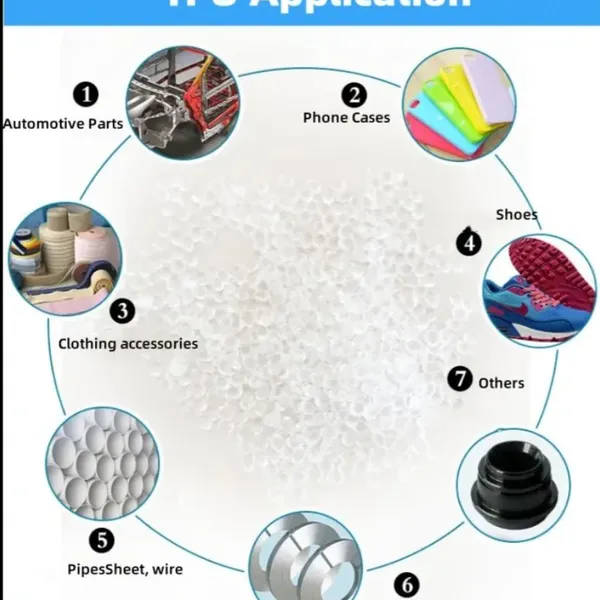
Factory Price TPU Resin TPU Granules KG Thermoplastic Polyurethane Powder for Sports Shoe Sole/Cable/Phone Case TPU PelletsUS$ 2.22MOQ: 1 Kilogram

-
Thermoplastic Polyurethane TPU Resin For Solvent-based Adhesive TPU GranulesUS$ 2.22MOQ: 1 Kilogram
-
Thermoplastic Polyurethane TPU Resin for Fire Hoses/Tpu Hot Melt AdhesivesUS$ 2.22MOQ: 1 Kilogram
-
Thermoplastic Polyurethane TPU Resin For Hot Melt Adhesive TPU GranulesUS$ 2.22MOQ: 1 Kilogram
-
Thermoplastic Polyurethane TPU Resin for Fire Hoses/Different Hardness TPU Pellets Virgin Plastic Raw MaterialUS$ 2.22MOQ: 1 Kilogram
-
Thermoplastic Polyurethane TPU Resin For Fire Hose TPU GranulesUS$ 2.22MOQ: 1 Kilogram
-
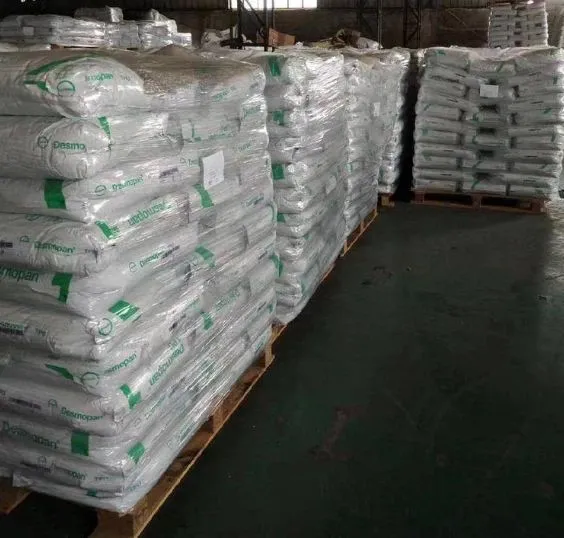
Low Temperature Solvent Based Aliphatic Non-yellowing TPU Adhesive for Shoe TPU ResinUS$ 2.22MOQ: 1 Kilogram
-
Thermoplastic Polyurethane Glue Hot Melt Adhesive Grade High Viscosity TPU Resin For ShoesUS$ 2.04MOQ: 1 Kilogram
-
Low Temperature Hot Melt Adhesive Resin TPU Solvent Ester DissolutionUS$ 2.22MOQ: 1 Kilogram
-
Thermoplastic Polyurethane Glue Hot Melt Adhesive Grade High Viscosity TPU Resin for ShoesUS$ 2.22MOQ: 1 Kilogram
-
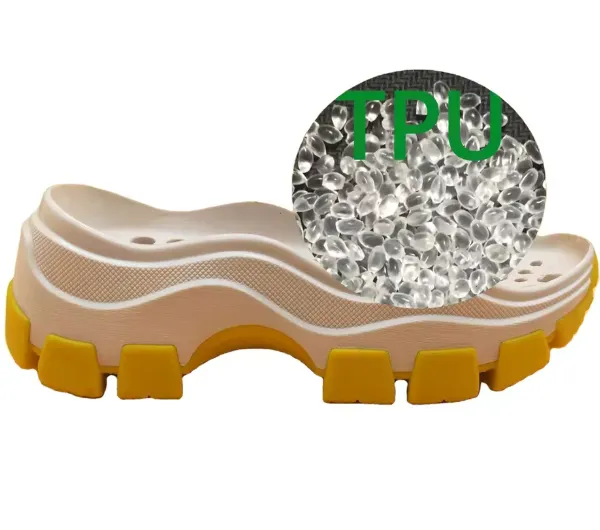
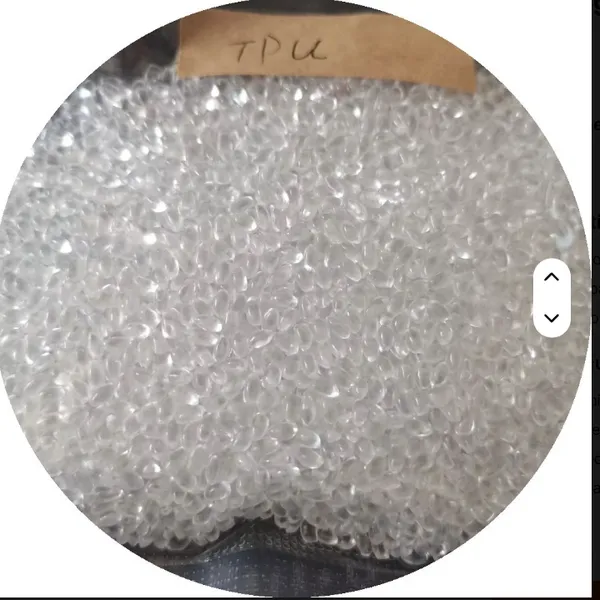
Thermoplastic Polyurethane Glue Hot Melt Adhesive Grade High Viscosity TPU Resin for ShoesUS$ 2.22MOQ: 1 Kilogram
-
Hot Melt Adhesive Grade TPU Thermoplastic Polyurethane Plastic Raw MaterialUS$ 2.22MOQ: 1 Kilogram
-
High Viscosity TPU Raw Materials Resin Adhesive Grade Thermoplastic Polyurethane TPU PelletUS$ 2.22MOQ: 1 Kilogram
-
60A-100A Low-temperature High Viscosity TPU Solvent Based Adhesive MaterialUS$ 2.22MOQ: 1 Kilogram
-
Low Temperature TPU 55A-85A Thermoplastic Polyurethane Granules TPU Resin Pellets for ShoesUS$ 2.22MOQ: 1 Kilogram
-
Thermoplastic Polyurethane Elastomer Granules TPU 65A Granules Polyurethane TPU Resin for ShoesUS$ 2.22MOQ: 1 Kilogram